


75kW Slip Ring Motor Control System for Steel Rolling Mill
Motor Control Warehouse designed and built a modern control system for a 75kW slip-ring wound rotor induction motor driving a steel rolling mill through a Radicon gearbox. The system replaced an ageing oil-cooled rotor resistance starter while retaining the existing motor and mechanical arrangement, providing controlled starting and stopping with reduced mechanical stress and improved operational reliability.
Project Overview
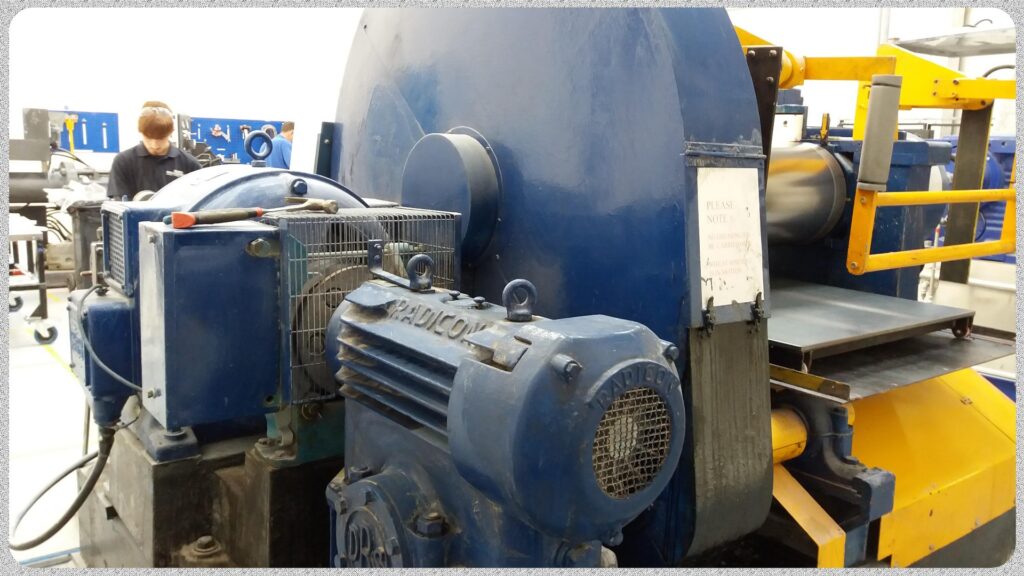
Motor Control Warehouse was asked to design and build a new control system for a 75kW slip-ring fed, wound rotor induction motor used to drive a steel rolling mill via a Radicon gearbox.
The existing system relied on an ageing stator-rotor starter box incorporating oil-cooled rotor resistors. As part of a wider machine upgrade, the client wanted to modernise the electrical control system while retaining the existing gearmotor and general mechanical arrangement.
The engineers at Motor Control Warehouse worked closely with Fairford Electronics to develop a solution based around the Fairford Synergy intelligent soft starter, combined with a purpose-designed air-cooled rotor resistor bank.
The resulting system provided controlled motor starting and stopping while maintaining the torque characteristics required for this demanding application.
The Challenge
Steel rolling mills can present particularly demanding motor starting conditions, with high starting torque requirements and significant mechanical loads placed on the driven equipment.
The existing starter system was ageing and relied on oil-cooled rotor resistors. The client wanted to replace this equipment as part of the wider machine upgrade without replacing the existing motor, gearbox or mechanical arrangement.
The new system therefore needed to:
- Provide a controlled soft start and soft stop
- Deliver suitable starting torque for the rolling mill application
- Limit peak mains supply current during starting
- Reduce mechanical stress on the motor, gearbox and driven machinery
- Integrate with the existing wound rotor motor and slip-ring arrangement
- Provide protection for the rotor resistor bank
- Incorporate a high-integrity emergency stop system
- Keep machine operation simple for the end user
The Solution
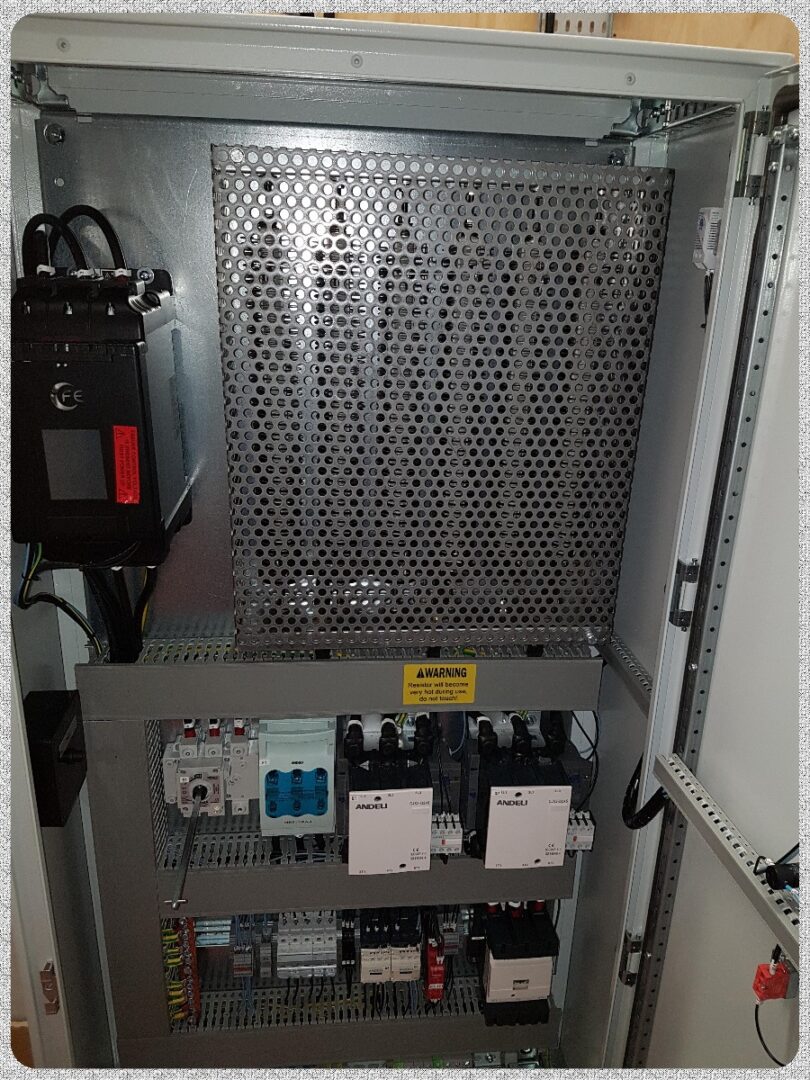
Motor Control Warehouse designed and built a complete control panel incorporating a Fairford Synergy intelligent soft starter and a specially selected air-cooled resistor bank.
The resistor bank is connected into the motor's rotor circuit through the motor's slip rings during the starting phase. By controlling the rotor resistance during acceleration, the system provides the high starting torque required by the rolling mill while helping to limit mains supply current and reduce mechanical stress.
Motor Control Warehouse worked closely with Fairford Electronics to correctly size the resistor bank for the application. The resistor bank was installed within the main control panel and protected against overheating using a specially selected adjustable thermal probe.
The thermal probe was positioned within the resistor bank, with the trip level configured during system commissioning to provide appropriate protection for the installation.
Once the motor reaches operating speed, the rotor resistance is removed from the circuit, allowing the motor to operate normally.
Key Features
- 75kW slip-ring wound rotor induction motor control
- Fairford Synergy intelligent soft starter
- Purpose-designed air-cooled rotor resistor bank
- Rotor resistance control during motor starting
- Controlled soft start and soft stop
- Optimised starting torque performance
- Reduced peak mains current during starting
- Adjustable thermal protection for resistor bank
- High-integrity SIL 3 emergency stop circuit
- Two-channel Schneider safety relay
- Redundant double-contactor power isolation
- English-language LCD operating and diagnostic display
- Simple front-panel start/stop controls
- Designed and built by Motor Control Warehouse
The Safety System
Safety was a key consideration in the design of the new control system.
A high-integrity SIL 3 emergency stop circuit was incorporated using a two-channel Schneider safety relay. Multiple emergency stop buttons were positioned around the machine, allowing the system to be safely stopped from different locations.
When an emergency stop is activated, power is removed from the system through a redundant double-contactor arrangement, providing a high level of protection for both operators and equipment.
The Fairford Synergy soft starter also provided clear operating and diagnostic information through its English-language LCD display, helping to simplify setup, commissioning and ongoing fault diagnosis.
The Technology
The Fairford Synergy intelligent soft starter was selected to provide controlled starting and stopping of the wound rotor motor while working with the application's external rotor resistance.
The rotor resistor bank plays an important role during acceleration. By introducing resistance into the motor's rotor circuit during starting, the system can provide the high torque required by the rolling mill without relying on a direct-on-line start.
The air-cooled resistor bank was specifically selected for the motor and application in conjunction with Fairford Electronics. Thermal protection was incorporated to monitor resistor temperature and trip the system if the configured temperature limit was exceeded.
This combination provided a modern control solution while allowing the existing 75kW motor and mechanical equipment to remain in service.
Outcome
Following commissioning, the new control system provided reliable operation of the steel rolling mill while significantly improving the starting characteristics of the existing motor.
The controlled starting process reduced mechanical stress on the motor, gearbox and rolling mill, while the rotor resistance system provided the torque characteristics required for the demanding application.
The replacement of the ageing starter equipment also provided the client with improved system diagnostics, modern safety functionality and more reliable control.
The client also benefited from reduced peak current demand during starting, contributing to energy-related cost savings associated with the installation.